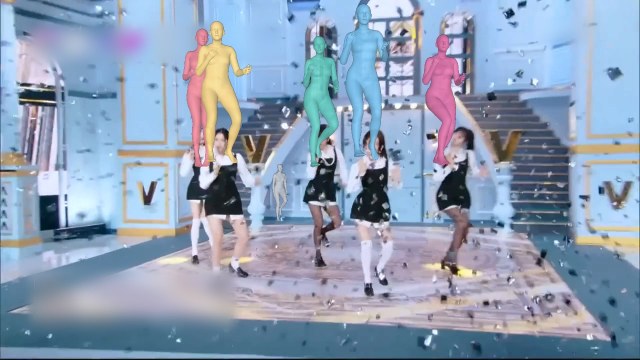
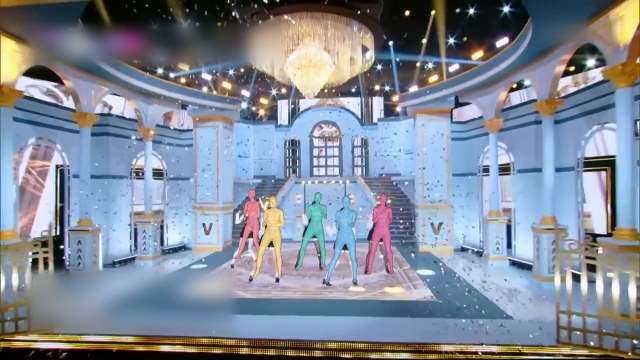
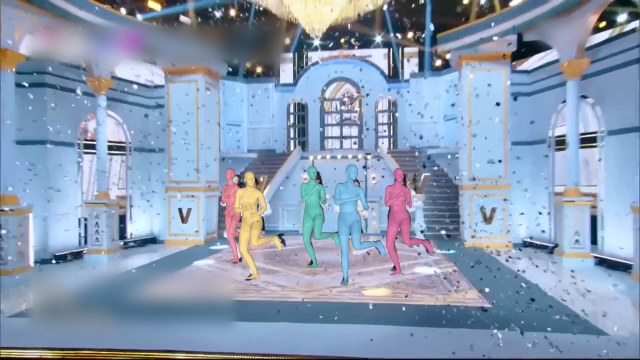
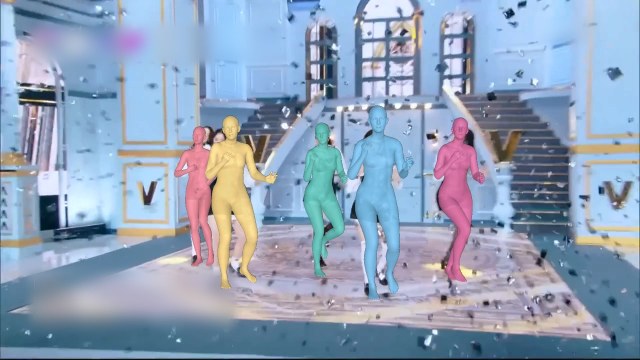
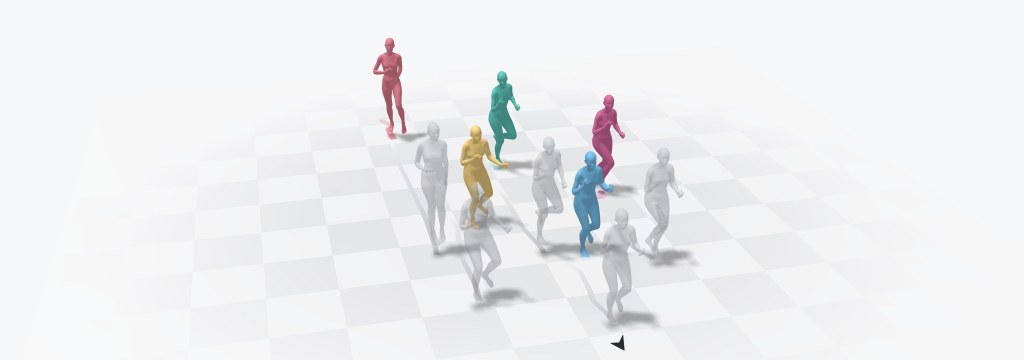
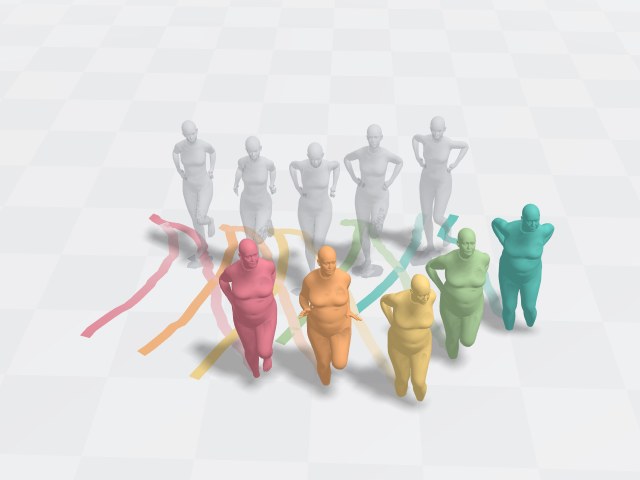
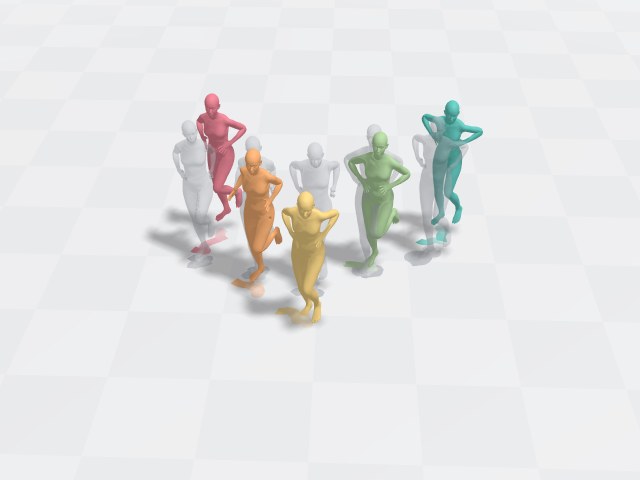
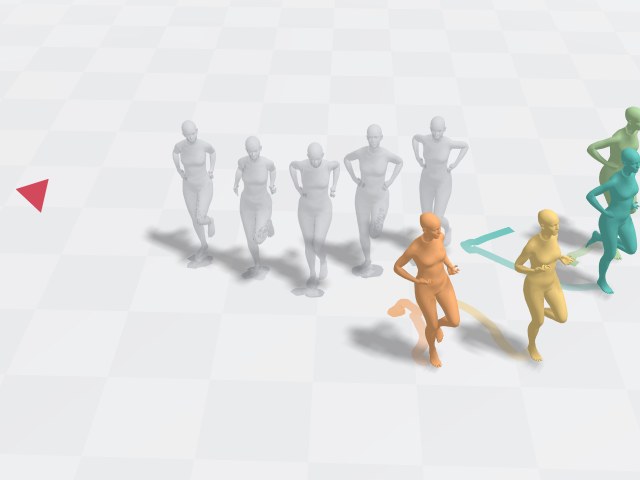
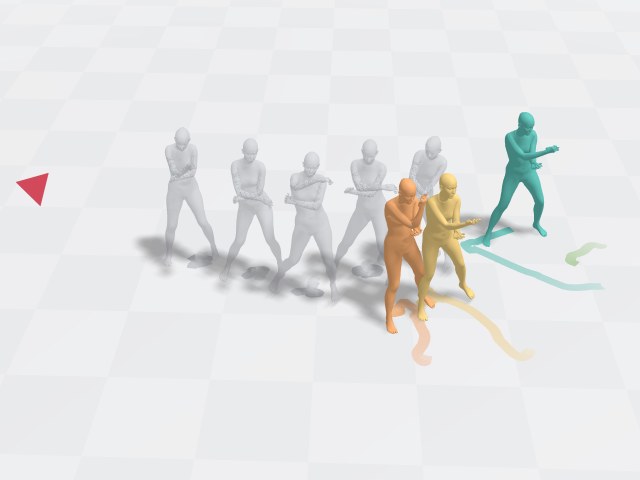
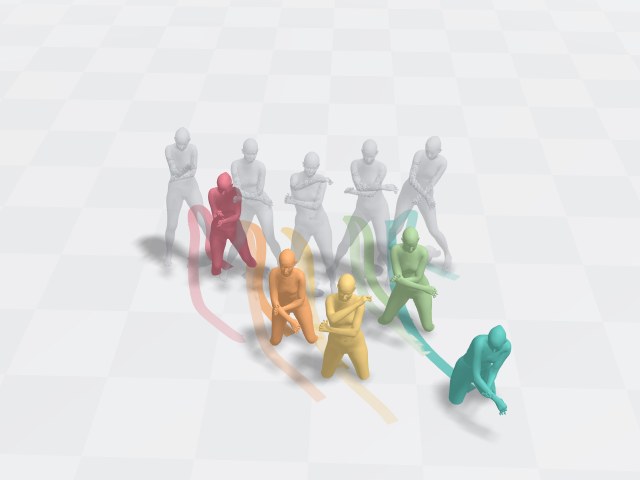
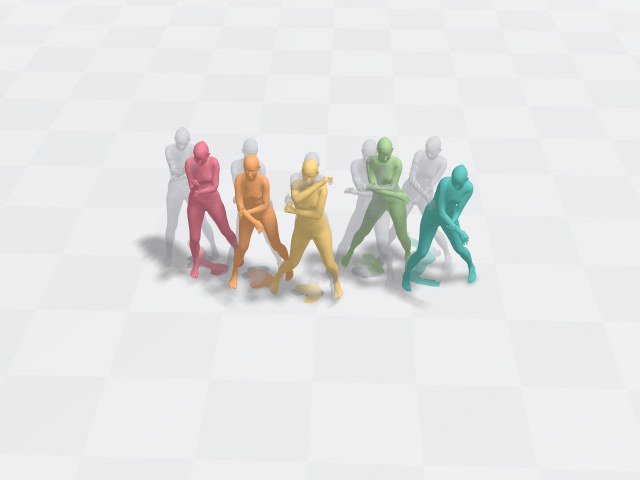
Two estimates of the same camera motion.
Visual odometry gives the camera's motion, ΔT. The meshes give a second estimate, ΔT', because
each performer's position
relative to the camera changes as it moves. The two should agree, but their scales can differ:
ΔT' = sΔT. Once they are
combined, a performer who is standing still appears to move by ΔŴ, a fraction of the camera's motion:
Both ΔŴ and ΔT can be read off the pipeline, so every stretch where a performer stands
still is one measurement
of s. We pool these over performers p and frame pairs (i, j), each weighted by its contact confidence
w. A least-squares fit then
gives s in closed form: